Understanding the Business Environment
Shifting Consumer Preferences
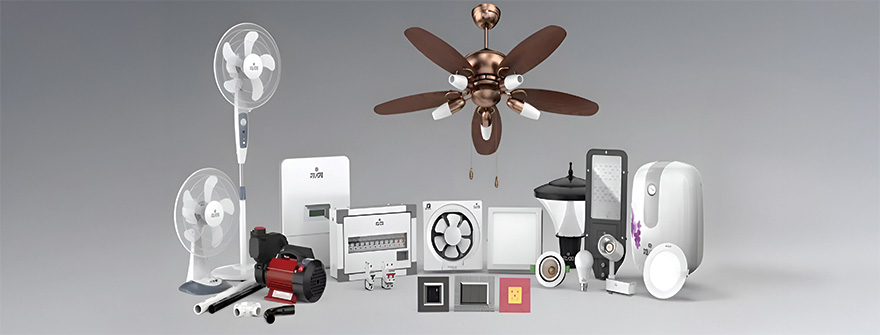
- With market penetration in standard FMEG categories (such as fans and lighting) now exceeding 80%, basic product expansion is no longer the primary growth engine
- Instead, evolving consumer aspirations are driving a strong preference for premium, feature-rich, and energy-efficient appliances. Brands are strategically pivoting their portfolios to capture this value growth amidst heightened competitive intensity
Switches: Navigating a highly fragmented landscape
- While consumer preference is shifting toward modular and automated designs, the switches market remains intensely fragmented
- To combat fierce competition and the flexible credit terms offered by private and unorganised players, leading brands are shifting strategy, focusing heavily on aesthetic differentiation and securing direct tie-ups with architects and interior designers for premium real estate projects
Switchgears: Industrial recovery to normalise mix
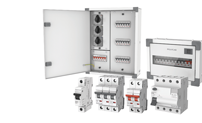
- While the LV switchgear segment continues to gain momentum, residential switchgears have recently outpaced industrial variants due to a previously weak infrastructure cycle
- However, a strong recovery in industrial infrastructure capex and real estate demand is expected to normalise this product mix, driving renewed demand for higher-margin industrial switchgears
Lighting: Volume-led growth amid price stabilisation
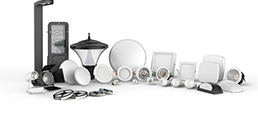
- Despite the structural shift toward LED lighting, the B2C lighting industry has recently faced significant price erosion, which has acted as a drag on overall category revenues
- As price realisations finally bottom out, future market expansion in this segment is projected to stabilise, transitioning from a value-driven to a primarily volumedriven growth model
Solar: Favourable Policy and Rapid Adoption
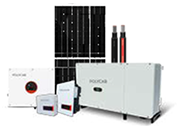
- The solar inverter market is expected to grow at 13.2% CAGR from 2025 to 2030, driven by renewable energy goals and falling tech costs. By January 2026, India’s solar capacity hit 140.6 GW, with 17.4 GW utility-scale and 5.1 GW rooftop additions in FY25. The PM Surya Ghar Yojana greatly increased residential demand, powering over 3 million homes. The Commercial and Industrial sector is also expanding fast due to rising corporate sustainability efforts
- Mandatory BIS-CRS compliance and BEE labelling are encouraging domestic manufacturing under 'Make in India.' Although testing and audits raise short-term costs, higher safety standards are increasing long-term sector confidence and reliability
Market Size by Category *
Switches
Lighting
LV Switchgear
Fans & Appliances
Strategic Levers Enhancing Performance
- Strengthening the B2C-led growth model by elevating brand visibility, sharpening category positioning, and running targeted campaigns across Fans, Lighting, Switches and LV Switchgear
- Expanding nationwide reach through whitespace mapping and deeper channel reach in Tier 2, Tier 3 and rural markets, supported by experiential retail formats such as Galleria, Arena and Shoppee
- Upgrading the portfolio with energyefficient, premium and smart products, including BLDC fans, modular and safe switches, LED lighting solutions, and connected/smart-home offerings
- Enhancing the LV switchgear portfolio with modular, safe and technologically advanced devices aligned with the segment’s faster growth versus MV/ HV categories
- Accelerating product innovation and design enhancement through in-house R&D capabilities, ensuring better aesthetics, efficiency, safety and compatibility with automation ecosystems
- Improving operational effectiveness through refined demand planning, better cost management and enhanced product availability across channels
Sustainability
We are advancing energy efficiency across our portfolio through next-gen technologies and designs. Our BLDC fans significantly reduce power consumption, LED lighting solutions deliver lower energy use with a longer lifespan, and our switches and switchgear are engineered to curb energy loss. These offerings are further enhanced with integrated digital technology that optimises product efficiency and enables more sustainable outcomes.
Performance in FY 2025-26
FMEG revenue
Dealers and distributors
FMEG EBIT margin
FMEG EBIT
Growth in
domestic
FMEG segment
Designing the Nextgeneration of Ceiling Fans
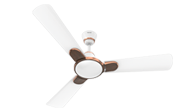
The Polycab Aerofame BLDC ceiling fan is a stylish centrepiece for modern spaces. UV-metalised trims and a telescopic canopy add to its contemporary look. It features seven-speed controls, LED speed indicators and 25 breeze settings for natural airflow. Aerodynamic aluminium blades ensure comfort and quiet operation.
Polycab also launched AeroRush, a new-generation BLDC ceiling fan that combines energy efficiency with modern aesthetics. Precisionengineered aluminium blades deliver strong airflow with smooth, quiet performance. Advanced BLDC technology delivers up to 50% energy savings, making it ideal for longterm use. Its design and features reflect Polycab's focus on innovation, comfort, and sustainability.
Solar Inverters for Large-scale Projects
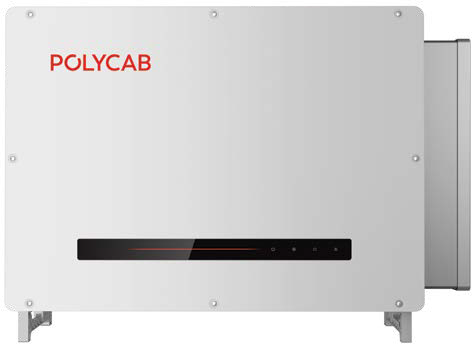
The business expanded its renewable portfolio with the UT Series 350kW three-phase Utility Solar Inverter, designed for large-scale solar projects. It boosts profitability, grid reliability and operational efficiency. Advanced safety, efficiency and weatherresistant features define the UT Series. The inverter maximises energy yield, reduces operational costs and improves long-term performance.
Our Products
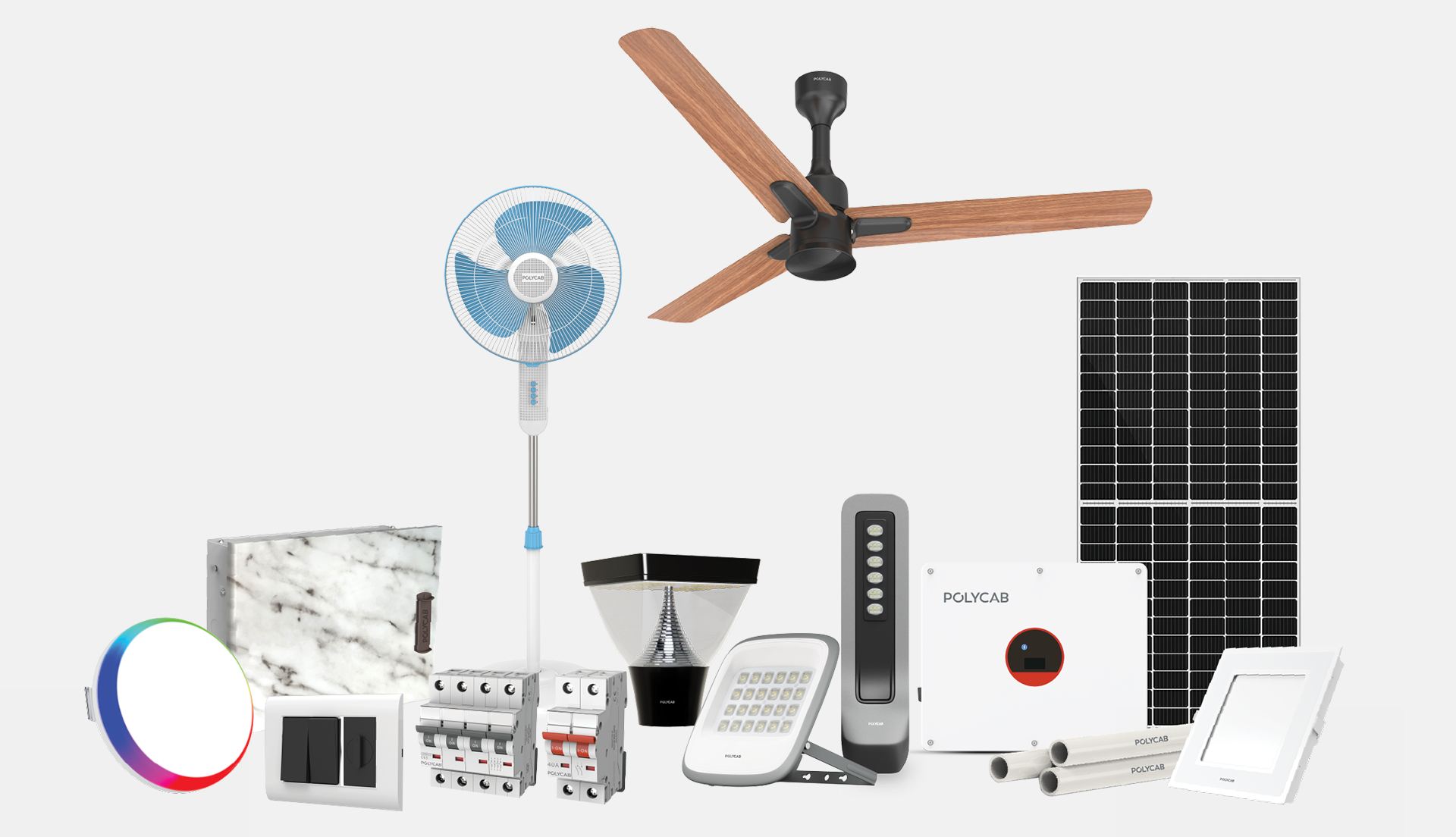
Fans
Switchgears
Lights and Luminaries
Conduits, Pipes & Fittings and Accessories
Switches

Solar Products