

Choosing Light Colour Temperature Guide: Understanding 3000K, 4000K and 6000K LED LightsChoosing Light Colour Temperature Guide: Understanding 3000K, 4000K and 6000K LED Lights
- June 23, 2026
- No comments yet
Choosing Light Colour Temperature Guide: Understanding 3000K, 4000K and 6000K LED LightsChoosing Light Colour Temperature Guide: Understanding 3000K, 4000K and 6000K LED Lights
Lighting does more than brighten up a room; it defines style, mood and comfort. The light colour temperature of your fixtures determines how warm or cool your space feels, influencing everything from focus to relaxation. Whether you’re designing your living room, setting up a home office or illuminating your outdoor space, understanding LED colour temperatures such as 3000K, 4000K and 6000K is key to perfecting your lighting setup.
What Is Light Colour Temperature?What Is Light Colour Temperature?
Measured in Kelvin (K), the light colour temperature tells us how “warm” or “cool” a light appears. Lower values like 2700K–3000K produce a warm, yellow glow. Higher values like 5000K–6000K emit a bright, bluish-white light, resembling daylight.
When choosing home lighting, colour warmth plays a huge role. Warmer lights make spaces feel cosy and intimate, while cooler lights bring energy and clarity. LED lighting gives you the flexibility to select the most suitable colour tone for each room.
Understanding the Kelvin Scale
The colour temperature of light follows a gradient:
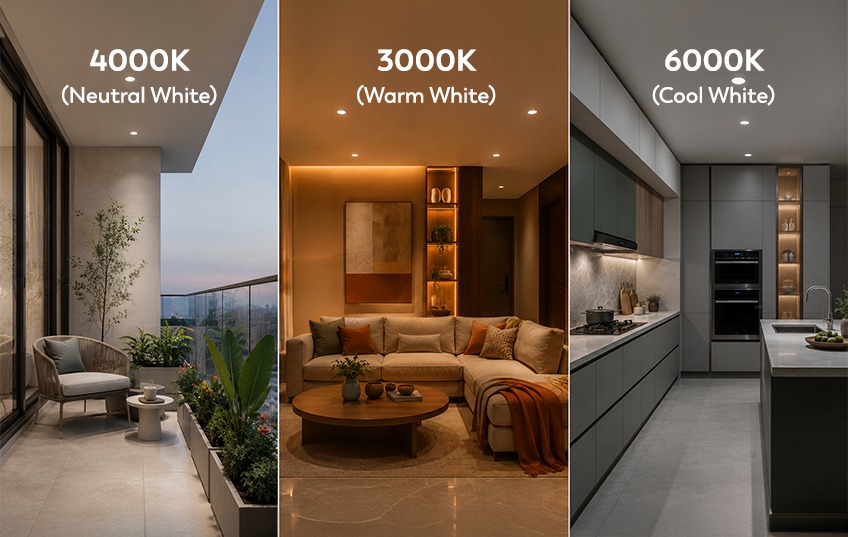
● 3000K (Warm White) – Gives a soft, golden hue similar to traditional bulbs.
● 4000K (Neutral White) – Feels balanced, slightly cooler than warm White.
● 6000K (Cool Daylight White) – Produces a bright, bluish light akin to daylight.
This progression is the foundation for how designers plan ambience in both residential and commercial lighting.
3000K – The Warm, Relaxing Glow
A 3000K light colour temperature delivers a comforting warmth that inspires relaxation. It’s ideal for bedrooms, living rooms and dining areas where you want a welcoming, mellow environment. This colour warmth mimics sunset tones, evoking calmness and intimacy, perfect for evenings or social gatherings.
In interior design, 3000K lights pair beautifully with wooden furniture, warm-toned fabrics and rustic finishes. Polycab’s LEDs in warm white variants help achieve this timeless ambience while staying energy-efficient.
4000K – The Balanced Neutral Tone
The 4000K light colour temperature is the midpoint between warm and cool lighting. It provides excellent brightness without being too sharp, making it popular for kitchens, workspaces and bathrooms. This neutral tone maintains visibility and colour accuracy, which is crucial for functional tasks. Many homeowners prefer it for areas that transition between relaxing and active zones. With its balance of warmth and clarity, 4000K white light complements modern and minimalist interiors beautifully.
For even distribution and glare-free illumination, Polycab’s LED Panel Lights and LED Downlights in 4000K bring professional-grade performance to residential and commercial spaces.
6000K – The Bright Daylight Effect
If you need maximum brightness and focus, a 6000K light colour temperature is the right pick. This setting emits a crisp, bluish-white light resembling midday sunlight, energising, modern and clear. 6000K lights are widely used in offices, garages, studios and outdoors, where clarity and attention to detail are essential. According to professionals, 6000K “daylight white” enhances alertness and supports task-oriented environments like workshops and study areas.
For robust and glare-free daylight illumination, explore Polycab’s LED Flood Lights and Street Lights, designed to deliver consistent brightness with high energy efficiency.
In workplaces and study areas, exposure to high colour temperature lighting, such as 6000K, has been proven to improve employees’ concentration by 37%, reduce fatigue by 27% and boost overall productivity by 19%. This makes 6000K LED lights an ideal choice for spaces dedicated to focused tasks, combining clarity with energy-efficient performance.
Matching Light Colour Temperature to Every RoomMatching Light Colour Temperature to Every Room
Choosing the right colour temperature for your lights can change how your home looks and works. Every room has its own lighting needs, and knowing what they are helps make the space feel comfortable and put together.
Bedroom & Lounge (2700K–3000K)
Choose warm white lighting that exudes softness and calmness. This temperature range creates a cosy, intimate ambience ideal for relaxation or winding down before bed. It complements warm interiors, wooden textures and earth tones beautifully.
Kitchen & Office (4000K)
Opt for neutral white lighting that balances warmth and brightness. This light colour temperature enhances clarity without being harsh, making it perfect for multitasking, cooking, reading and productive work environments. It also ensures natural colour rendering, great for both home and professional use.
Garage & Study (5000K–6000K)
Pick a bright, cool white light that looks like daylight. This temperature zone wakes you up and helps you focus on tasks that need a lot of attention, like reading prints, woodworking or fixing cars. It's the best choice for places where being right is important.
Outdoor Spaces (6000K)
Select daylight-like illumination for exteriors, driveways, or gardens. This light colour temperature ensures maximum visibility, enhances safety and delivers a refreshing brightness similar to clear morning sunlight. It’s both practical and visually striking for outdoor aesthetics.
By pairing each room with the suitable light colour temperature, your interiors appear more natural, functional and inviting, a perfect blend of comfort and performance.
Also Read: 5 Tips for Selecting the Best LED Lights for Every Room
How to Choose the Right Colour TemperatureHow to Choose the Right Colour Temperature
When choosing among 3000K, 4000K and 6000K, consider:
● Purpose – Warm light for comfort, cool light for clarity.
● Decor Style – Earthy or wooden themes pair with warm tones (3000K), while sleek, modern interiors suit neutral or daylight tones (4000K–6000K).
● Room Function – Choose 4000K for general tasks and 6000K for precision work.
● Colour Coordination – Light affects how wall colours and materials appear. Warm white deepens reds and oranges, while cool white highlights greys and whites.
By evaluating these factors, you ensure your light colour temperature enhances both function and aesthetics.
The Science Behind Colour Warmth and MoodThe Science Behind Colour Warmth and Mood
Studies show that colour warmth can affect emotional and physical comfort.
● Warm light (3000K): Triggers relaxation, making it suitable for unwinding areas.
● Neutral white (4000K): Keeps you alert yet calm, suited for mixed-use spaces.
● Cool daylight (6000K): Energises and improves concentration in high-performance environments.
Selecting the right colour temperature of light, therefore, directly contributes to wellness and productivity indoors.
Energy Efficiency and LED Performance
Beyond ambience, choosing your light colour temperature also ties into efficiency. LED technology ensures minimal heat emission and a longer lifespan, even at higher brightness levels.
Polycab’s LED Panels, Downlights, and Smart Lighting Solutions combine optimal colour temperature of light with advanced dimming and remote control features, allowing you to adjust ambience and efficiency on demand. Browse Polycab’s complete LED Lighting Range for residential and commercial solutions that balance beauty and performance. Choosing the right light colour temperature is more than a design choice; it’s about creating the atmosphere you want to live in. From relaxing 3000K to vibrant 6000K tones, Polycab’s versatile LED range ensures perfect lighting harmony in every corner of your home.
Frequently Asked Questions - Light Colour TemperatureFrequently Asked Questions - Light Colour Temperature
1. What is the best colour temperature for lights in the home?1. What is the best colour temperature for lights in the home?
For a home that feels good, 3000K to 4000K is best. 3000K makes a warm light that helps you relax, while 4000K works well in active or shared spaces.
2. Is it too bright to use indoors at 6000K?
6000K might be too cool for rooms that are already warm. It's great for lighting up places where you need to see clearly, like work areas, garages or the outdoors.
3. Is it possible to mix different colour temperatures in one house?3. Is it possible to mix different colour temperatures in one house?
Of course. A layered look is created by mixing warm and cool lighting, like 3000K in bedrooms and 4000K in hallways.
4. Does the colour temperature of light affect mood?4. Does the colour temperature of light affect mood?
Yes. Warmer tones induce calmness, while cooler tones enhance focus and alertness, affecting emotional responses to lighting.
5. Which Polycab lighting products support various colour temperatures?5. Which Polycab lighting products support various colour temperatures?
Polycab’s range of LED Bulbs, Battens, Panels, Downlights and Flood Lights comes with multiple colour temperature options for every mood and space.


